


Updated: 07 August 2026
Should I rent or sell my house? For a Fairfax homeowner facing a move, that question really breaks down into three smaller ones: how long you’re actually leaving, what the house would earn as a rental versus what it would net at sale, and whether you want the ongoing responsibility of being a landlord at all. Homeowners who work through those three factors in order tend to land on a clearer answer than those who start from a general feeling about the market.
Quick Answer
Renting usually makes more sense when the move is temporary, the numbers work after covering the mortgage, taxes, and upkeep, and you’re willing to take on landlord responsibilities or hand them to a property manager. Selling usually makes more sense when the move is permanent, you need the equity now, or the rental math does not clear enough margin to justify the risk. Fairfax’s rental rates and home values both matter here, and neither one alone answers the question.Key Takeaways
- The permanence of your move matters more than the current market, since a strong market today does not guarantee one when you would need to sell later.
- Fairfax rents vary meaningfully by unit size, so a rough estimate is not precise enough to run the math on a specific house.
- Property tax, insurance, and upkeep all continue whether the house is occupied or not, and need to be counted against rental income, not just the mortgage payment.
- A federal capital gains exclusion on primary residences narrows the longer a home sits as a rental, so it is worth raising with a CPA early in the decision.
- Being a landlord is an ongoing responsibility that continues well after the lease is signed, and you can hand that responsibility to a property manager if you decide to rent.
How Long Are You Actually Leaving?
The single biggest factor in this decision is whether the move is temporary or permanent. A relocation with a real chance of returning in a few years, a military transfer, or a job assignment with an end date all favor renting, since selling and buying back into Fairfax later usually costs more in commissions and closing costs than carrying the house as a rental in the meantime. A permanent move, or one driven by the need for equity now, favors selling.Run the Numbers Before You Decide
Rents in Fairfax vary enough by unit size that a single citywide number is not useful for estimating what a specific house would bring in.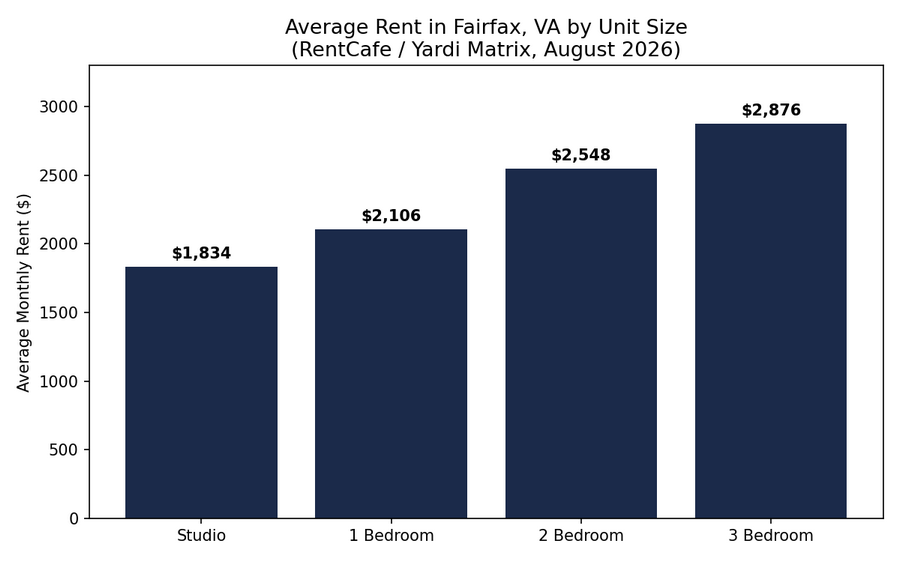
The Northern Virginia market, NVAR tracks, which includes Fairfax County, posted a median sold price of $810,000 in June 2026, up 5.2% year over year, with homes averaging 19 days on market. A strong sale price cuts the other way on the math too: a house that would sell quickly and well today is also a house that carries real opportunity cost if it sits as a rental instead. Weigh the rent a comparable Fairfax property could realistically bring against what selling now would net after paying off the mortgage and covering closing costs.
Fairfax County’s real estate tax rate for 2026 is $1.12 per $100 of assessed value, and that bill continues whether the house is rented or sitting vacant. Insurance, HOA dues if applicable, and routine maintenance do too. Renting only makes sense once rental income clears the mortgage, taxes, insurance, and upkeep with enough margin left to make the ongoing effort worthwhile.
The Capital Gains Window Narrows the Longer You Rent
If the house has been your primary residence, federal law allows an exclusion on capital gains at sale, up to $250,000 for a single filer or $500,000 for a married couple filing jointly, but only if you have owned and lived in the home for at least two of the five years before the sale. Converting the house to a rental starts that five-year clock, and the longer it stays a rental, the more of that exclusion window closes. This is not tax advice, and the right move depends on your specific situation, but it’s worth raising with a CPA while you are still weighing the decision, rather than well into a multi-year rental.Being a Landlord Is a Real, Ongoing Job
Renting out a house means more than collecting a check. It means finding and screening tenants, documenting the property’s condition with regular inspections, responding to maintenance issues, and knowing the legal process for handling a late-paying or non-compliant tenant if it comes to that. None of that is a reason to avoid renting; plenty of Fairfax homeowners do it successfully, but it is a reason to decide honestly whether you want to do that work yourself or hand it to a property manager. Both are legitimate answers. Assuming the work will be easier than it is tends to be the mistake.“The owners who end up frustrated with renting are usually the ones who expected it to be passive. It rarely is, especially in the first year, when every small decision, whether it’s a repair or a late rent payment, still comes back to the owner.” Marc Blackwood, Real Property Management Pros
If You Decide to Rent
Renting out a house you’ve not rented before comes down to a specific sequence: pricing it, getting it ready, listing it, screening applicants, and signing a lease that holds up if something goes wrong. How to rent your house in Northern Virginia walks through that process step by step. If the house needs work before it is rent-ready, a few low-cost kitchen updates are often the highest-return place to start in Fairfax, specifically.
Pricing, tenant demand, and turnover patterns are specific to Fairfax rather than uniform across Northern Virginia, which is why property management in Fairfax is handled a little differently than a rental in Loudoun or Prince William.
If the house came to you through inheritance rather than a move, managing an inherited property covers decisions specific to that situation, since the calculation is not always the same as for a homeowner relocating for work.
If You Decide to Sell
If the numbers point toward selling, or the move is permanent enough that renting does not make sense, a real estate agent familiar with the Fairfax market can advise on pricing, timing, and preparation. RPM Pros focuses on property management rather than sales, so this is where a listing agent becomes the right guide.Questions About Renting or Selling a Fairfax Home
These are the questions that most often come up among Fairfax homeowners weighing this decision.What are the pros and cons of renting out your house instead of selling?
Renting can generate ongoing income and lets you keep the property while the market and your circumstances play out, but it comes with landlord responsibilities, carrying costs that continue regardless of vacancy, and a narrowing capital gains exclusion if the home was your primary residence. Selling converts the equity to cash now and ends the ongoing responsibility, but forecloses the option to change your mind later without buying back in.Is renting out my house in Fairfax actually profitable?
It depends on the specific numbers: what the house would rent for at its size and condition, weighed against the mortgage, property tax, insurance, and maintenance. A property that covers those costs with a reasonable margin is worth considering; one that barely breaks even carries risk with little upside.How long do I need to have lived in the house to avoid capital gains tax when I sell?
Federal law requires that a home be lived in as a primary residence for at least two of the five years before the sale to qualify for the exclusion. This is general information, not tax advice specific to your situation, so confirm the details with a CPA.Do I need a property manager if I decide to rent my Fairfax home?
No, some owners manage a single property themselves. Single-family property management covers what changes when an owner decides to hand off some or all of the process instead.What happens to the house if I move away and do neither right away?
A vacant, unmanaged house is the worst version of both options: it still carries the mortgage, tax, and insurance costs of renting without any income, and it can deteriorate or run into insurance complications faster than an occupied one. If you’re not ready to decide, a temporary property management arrangement is usually safer than leaving it vacant.Get a Clear Answer Before You Decide
The math on renting versus selling is specific to your house, your mortgage balance, and the Fairfax market right now, not a general rule of thumb. A Wealth Optimizer analysis runs those numbers for your specific property, so the decision is based on your actual figures instead of a guess.Article Sources
- Northern Virginia Association of Realtors (NVAR), sourced from Bright MLS. Market Statistics: June 2026. Published July 13th, 2026.
- Fairfax County Department of Tax Administration. Real Estate Assessments & Taxes. Accessed August 5th, 2026.
- RentCafe (Yardi Matrix). Average Rent in Fairfax, VA. Updated August 1st, 2026.
- Tax Notes. Exclusion of Gain From Sale of Principal Residence. Accessed August 5th, 2026.