


First published: 19 February 2015
Owning rental property in Northern Virginia, whether in Fairfax, Arlington, Alexandria, or Loudoun County, can be a smart financial move. But if you’re not taking advantage of tax deductions, you might be giving the IRS more than its fair share.
Your rental income is taxable, but the good news is that so are many of your rental expenses. From mortgage interest and maintenance to property taxes and management fees, there are plenty of ways to reduce the amount of rental income that gets taxed.
Many landlords overlook deductions or lump personal and business expenses together, which can trigger IRS scrutiny or leave thousands of dollars on the table. This guide breaks down what you can deduct (and how to do it right) so you keep more of your profits and stay fully compliant.
Let’s walk through the most important tax deductions landlords in Northern Virginia should know about, starting with how rental income is actually taxed.
How Rental Income Gets Taxed
Before you start deducting expenses, it’s important to understand what the IRS actually considers rental income.If you rent out residential property in Northern Virginia, whether a single-family home in Fairfax, a townhouse in Alexandria, or a condo in Arlington, any payments you receive from tenants generally count as taxable rental income. That includes:
- Monthly rent payments
- Advance rent (if a tenant pays several months upfront)
- Lease cancellation fees
- Tenant-paid owner expenses (e.g., the tenant pays your utility bill)
- Security deposits (if you keep them to cover damage or unpaid rent).
Related Reading: NOVA Landlord Rescue Kit: How to Handle Common Landlord Problems with Tenants
What You Can Deduct from Your Rental Income

The IRS allows landlords to deduct ordinary and necessary expenses related to renting out a property, which means you can subtract these from your total rental income before taxes are calculated.
If you own rental property in Northern Virginia, here are some of the most common and powerful deductions available to you.
Top Deductible Rental Property Expenses
These are your bread-and-butter tax deductions:- Mortgage interest: The interest portion of your mortgage payment is fully deductible.
- Property taxes: Yes, you can deduct property taxes! Fairfax County, Loudoun, Arlington, and other Northern Virginia jurisdictions can have high rates, so this deduction adds up.
- Landlord insurance premiums: This includes coverage for fire, liability, flood, or other rental-specific policies.
- HOA or condo fees: If your rental is subject to homeowners association dues, these count as deductible expenses.
- Repairs and maintenance: Fixing a leaky faucet? Replacing broken tiles? These costs are deductible, but note that capital improvements (like a new roof or kitchen remodel) must be depreciated over time.
- Utilities: If you pay for water, gas, electricity, or trash collection, you can deduct those amounts.
- Advertising: Listing fees on Zillow, Facebook Marketplace ads, or even signage costs can be deducted.
- Professional services: Fees paid to lawyers, accountants, or a property management company like RPM Pros are deductible.
- Travel expenses: Visiting your property for inspections, repairs, or showings? Mileage, tolls, and parking costs may qualify. Just keep clear records.
Example Scenario for a Northern Virginia Landlord
Let’s say you made $30,000 in rent on a rental home in Fauquier, VA, last year. You also paid:- $4,000 in mortgage interest
- $5,000 in property taxes
- $2,000 in maintenance and repairs
- $2,000 in insurance and HOA fees
- $1,000 in utilities
- $1,500 in professional services.
Pro Tip: Keep every receipt, invoice, and lease document. Good records will make or break your case if you’re ever audited.
Related Reading: Dealing with Property Damage Caused by Tenants in Northern Virginia
How to Report Rental Income and Claim Tax Deductions
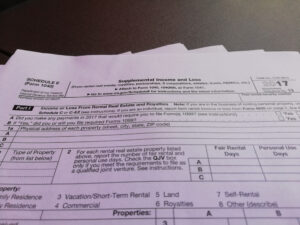
As a landlord in Northern Virginia, knowing what you can deduct is only half the battle. You also need to know how and where to report those deductions on your tax return. Done correctly, your filings can significantly reduce your taxable rental income and help you avoid costly mistakes.
For most landlords, the key form is Schedule E (Form 1040). This is where you’ll report the rental income you earned and the tax deductions for landlords paid through expenses like maintenance, property tax, and mortgage interest.
Reporting Your Rental Income
The first part of Schedule E focuses on income. This is where you report the total amount of rent paid by your tenants during the year. Every rent check you receive counts as taxable income, even if you used that money to pay for property upkeep or mortgage payments. Your goal here is to be thorough and accurate. Include:- All rent received (even partial payments)
- Any advance rent collected
- Lease cancellation fees (if applicable)
- Expenses paid by the tenant that are your responsibility (e.g., if they paid a utility bill that’s in your name).
Claiming Deductions on Schedule E
Next comes the good part: reducing your taxable rental income by claiming all applicable deductions. This is where deductible property tax, insurance, and other write-offs come into play. Common expenses to deduct include:- Advertising costs for finding new tenants
- Cleaning and maintenance for the rental unit
- Property management fees or commissions paid to agents
- Homeowner association dues
- Insurance premiums (fire, flood, liability, etc.)
- Legal and accounting fees related to the rental
- Mortgage interest (for loans on the rental property)
- Utilities paid by you as the landlord
- Deductible property tax paid to Fairfax County or other local jurisdictions.
What Landlords Should Avoid Deducting
It’s just as important to know what not to include on Schedule E. Misreporting deductions can trigger an audit or lead to penalties. You cannot deduct:- The value of your own labor (e.g., if you personally repaint the property)
- Capital improvements (these must be depreciated, not deducted all at once)
- Rent you expected to receive but didn’t (vacancy loss isn’t deductible).
Special Rules for Depreciation, Travel, and Property Tax Deductions
Some of the biggest tax benefits available to Northern Virginia landlords aren’t always obvious. They fall into a few lesser-known categories that require special handling: property depreciation, landlord travel expenses, and property tax deductions. Done right, these can significantly reduce your taxable rental income, but there are rules to follow.Understanding Depreciation: A Hidden Tax Benefit
You can’t deduct the cost of the rental property itself all at once, but you can claim a portion of its value each year through depreciation. The IRS allows landlords to depreciate residential rental property over 27.5 years, creating a consistent annual deduction even if you didn’t spend any money that year. What qualifies for depreciation?- The building (not the land)
- Certain capital improvements (like a new roof or HVAC system)
- Appliances, carpeting, and other fixtures installed in the unit.
Landlord Travel: What You Can (And Can’t) Deduct
Own a property in Arlington but live in Fairfax? Travel to your rental property for inspections, repairs, or rent collection may be tax-deductible, including mileage, tolls, parking, and even lodging if the trip is necessary and business-related. To deduct travel costs:- Keep detailed mileage logs or receipts
- Only deduct travel that’s directly related to managing, maintaining, or conserving the rental
- Use the standard mileage rate (set annually by the IRS) or actual expenses, depending on your record-keeping
- Mixed-use trips, where you combine a rental inspection with a beach vacation, are a no-go for full deduction. Only the business portion is eligible.
How to Deduct Property Tax the Right Way
If you own rental property anywhere in Northern Virginia, you pay property taxes to your local county. The good news? Those are considered deductible property taxes, and you can include them on your Schedule E each year. To deduct property tax properly:- Only deduct taxes specifically assessed for the rental property
- Don’t deduct fees for services (like trash collection or water) unless they’re billed as property taxes
- Keep proof of payment (your mortgage statement or county tax bill works).
Record-Keeping Tips to Maximize Your Tax Return Without Stress

If you want to take full advantage of tax deductions for house rent, you’ll need more than receipts in a shoebox. The IRS expects accurate, well-organized documentation, especially when you’re trying to deduct property taxes, claim repairs, or offset your rental income through eligible expenses.
Clear records protect you from headaches during tax season — and ensure you’re getting every deduction you’re entitled to.
Keep a Dedicated Paper or Digital Folder for Each Property
Whether you own one unit or five, start by keeping a separate folder (physical or digital) for each property. Within that folder, include:- Copies of lease agreements and security deposit records
- Invoices and receipts for repairs, maintenance, and supplies
- Monthly records of rental income received
- Property tax bills and proof of payment
- Utility bills you paid as the landlord
- Notes on mileage or visits made to the property (dates and purpose).
Maintain a Running Expense Log
A basic spreadsheet or handwritten ledger is enough; what matters is consistency. For every expense, record the date, amount, category (e.g., repairs, landlord insurance, travel), and notes about what it was for. This makes it easier to fill out Schedule E, track trends over time, and defend your deductions if ever questioned.Know What’s Personal vs. Deductible
Some landlords get tripped up by blurred lines, like using a personal credit card for rental expenses, or mixing maintenance trips with unrelated errands. Keep personal and property finances separate, and only deduct what directly relates to managing, maintaining, or improving the rental.Pro tip: A good property management company can provide you with year-end summaries that include categorized expenses and rental income statements, simplifying your tax prep and helping you make smarter decisions going forward.
Common Tax Mistakes Northern Virginia Landlords Make (And How to Avoid Them)
Even experienced landlords can miss out on valuable deductions or make errors that invite IRS scrutiny. Knowing the most common missteps can help you protect your profits and keep your rental portfolio running smoothly.Let’s walk through the biggest pitfalls and how to steer clear of them.
Mistake #1: Forgetting to Report All Rental Income
It’s tempting to think that a late or partial payment doesn’t “count,” especially if you refunded part of it or let the tenant catch up the next month. But all rent paid, including advance rent, lease cancellation fees, and even bartered services, must be reported as rental income in the year it was received.Solution: Track every dollar received, even if it’s unusual or unexpected. It keeps your filings honest and avoids penalties later.
Mistake #2: Confusing Repairs with Improvements
Did you repaint the living room after a tenant moved out? That’s typically deductible as a repair. But if you knocked down a wall to add a half-bath, that’s an improvement, and must be depreciated over time, not deducted in full the same year.Solution: Learn the difference between repairs (deductible immediately) and improvements (capitalized and depreciated). When in doubt, consult a tax advisor familiar with landlord tax law.
Mistake #3: Not Deducting Property Taxes Properly
Many landlords forget to deduct property tax on their Schedule E, especially if it’s bundled into mortgage payments. But deductible property tax is one of the largest tax breaks available, and failing to claim it leaves money on the table.Solution: Pull your year-end mortgage statement or request a tax bill from the local authority. Always separate the tax amount and list it as a line item deduction.
Mistake #4: Losing Receipts or Documentation
Without proof, even legitimate expenses can be disallowed. And vague categories like “miscellaneous” or “general maintenance” won’t cut it if the IRS ever asks for backup.Solution: Keep clear records with specific categories and itemized notes. Store receipts (digitally or physically), and always match them to the right property and tax year.
Mistake #5: Overclaiming Personal Travel
Driving to the property for maintenance? That’s deductible mileage. But if you mixed it with a trip to the grocery store or a weekend getaway, the whole trip likely isn’t deductible.Solution: Track only the miles and expenses directly related to rental activity. Record odometer readings, destinations, and the purpose of each trip, just like a business log.
Real Property Management Pros help Northern Virginia landlords avoid these common mistakes by keeping meticulous records, offering expert advice, and ensuring you get every eligible tax deduction for rent paid and every cent of deductible property tax you’re entitled to.
Make Every Deduction Count
You work hard for your rental income, so don’t let poor records or overlooked write-offs eat into your return. From deductible property tax to travel expenses and routine repairs, the IRS offers plenty of ways to reduce your tax burden as a Northern Virginia landlord. But the key is knowing what’s allowed, staying compliant, and documenting everything correctly.At Real Property Management Pros, we make that easy.
We don’t just collect rent or schedule repairs. We help you maximize tax deductions for rent paid, maintain audit-ready records, and ensure your investments stay profitable and protected. Whether you own a single property in Fairfax or a growing portfolio across Alexandria, Arlington, or Loudoun County, we’re here to help you keep more of what you earn.
Stop leaving money on the table at tax time.
Let us show you how expert property management can reduce stress, increase deductions, and streamline your entire rental operation.
Schedule your free consultation with RPM Pros today and take the guesswork out of property ownership.
Article Sources
- Law Insider. “Advance Rent definition”. Accessed 15th October, 2025
- IRS. “About Schedule E (Form 1040), Supplemental Income and Loss”. Accessed 15th October, 2025
- Investopedia. “Understanding Depreciation of Rental Property: A Comprehensive Guide”. September 4th, 2025
- Vanguard. “Cost basis & taxes”. Accessed 15th October, 2025
- IRS. “Standard mileage rates”. Accessed 15th October, 2025
- Investopedia. “How and Where Is Revenue From Barter Transactions Recognized?” 7th May, 2025.