


This guide covers what multifamily property management actually entails, how it differs from managing a single-family rental, what the Northern Virginia multifamily market looks like heading into the second half of 2026, and when it’s time to bring in professional management.
Quick Answer: What Does Multifamily Property Management Involve?
Multifamily property management covers leasing and marketing vacant units, screening and placing tenants, coordinating maintenance across shared systems and common areas, collecting rent and reporting on financial performance, managing renewals and retention, and staying ahead of the compliance requirements that come with operating multiple units under one roof. On larger assets, it also means deciding how to staff the property, whether that’s a full on-site team, a centralized model, or a hybrid of the two.Key Takeaways
- Multifamily property management spans leasing, renewals, maintenance coordination, financial reporting, and staffing decisions, all of which have a direct and compounding effect on Net Operating Income (NOI).
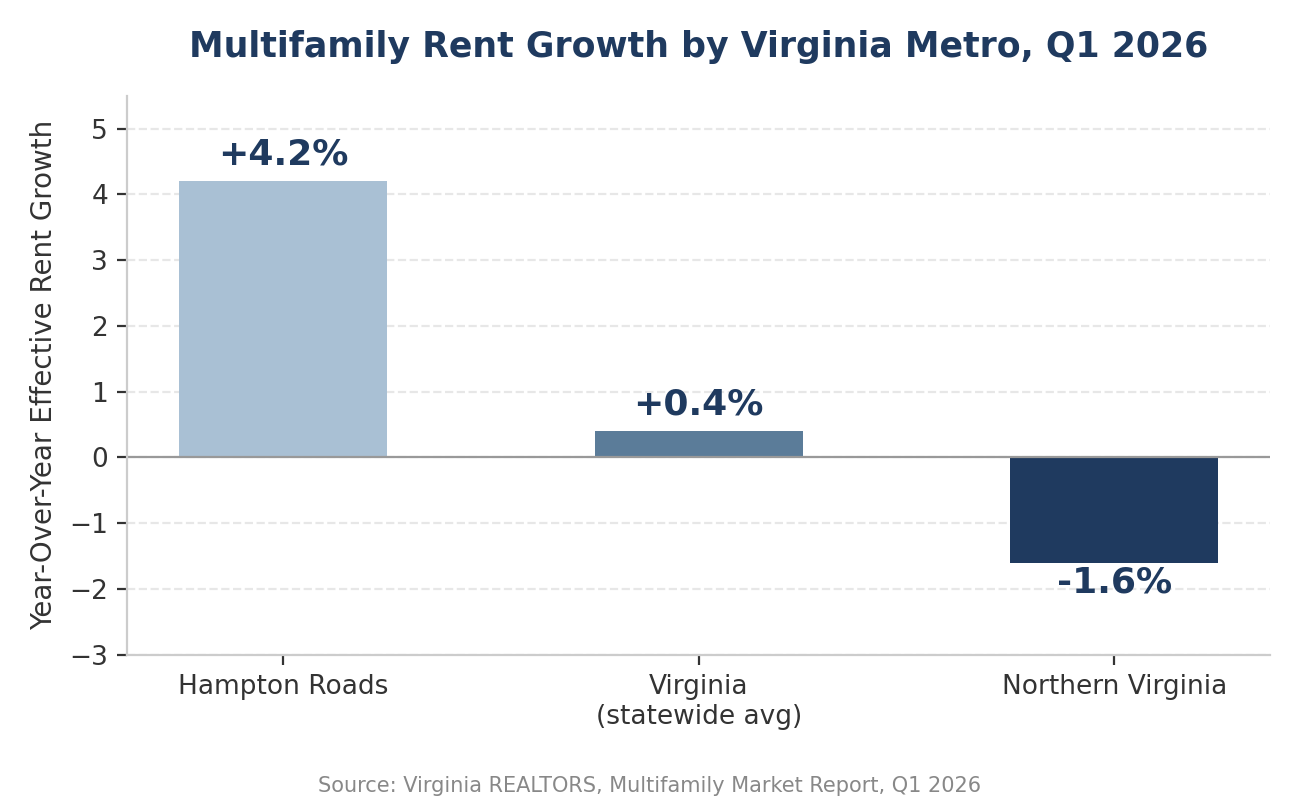
- Northern Virginia multifamily rents fell 1.6% year over year in the first quarter of 2026, the steepest decline of any metro area in Virginia, even as the state average rent rose slightly.
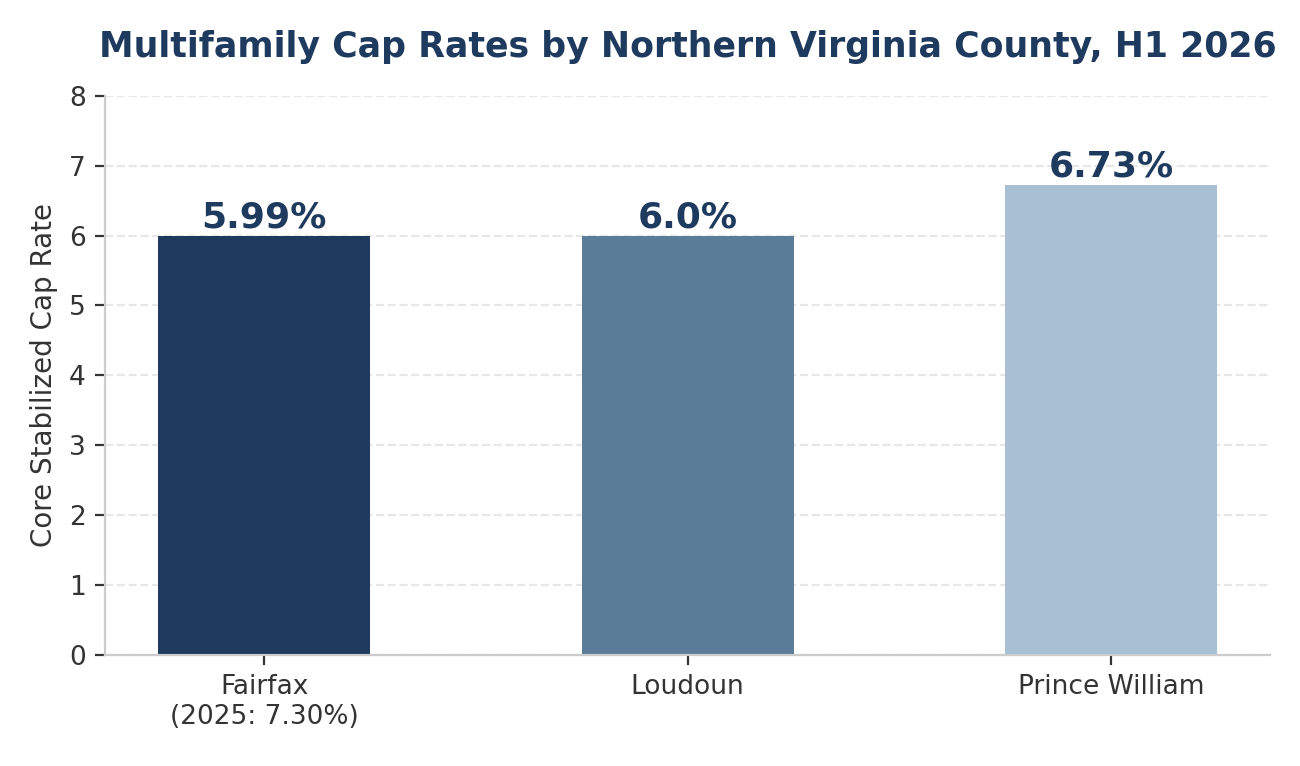
- Despite softer rents, investment capital continued to flow into the region: multifamily was the leading asset class by dollar volume in Fairfax County in the first half of 2026, and cap rates compressed across the board.
- A softer rental market raises the cost of getting leasing, renewals, and maintenance wrong. It does not lower it.
- The right staffing and operating model depends on the asset’s size and complexity. There is no single correct answer for every property.
What Is Multifamily Asset Management?
Multifamily asset management is the strategic oversight of a rental property’s financial and operational performance. It looks at whether the property is producing the income, occupancy, retention, expense control, and long-term value that the owner expected when they bought it.In practice, asset management and property management overlap. The asset plan sets the target. The property management operation delivers against it through leasing, renewals, maintenance, rent collection, reporting, and staffing decisions.
What Falls Under Multifamily Property Management Services?
Multifamily property management is the day-to-day and long-term operation of a rental property with more than a handful of units owned by a single owner. When researching multifamily property management services, it helps to understand that this field operates closer to running a small business than to managing a single rental home, because the number of moving parts scales with every additional door.At its core, it covers five areas: leasing and marketing to keep units filled, tenant screening and placement to protect the quality of the resident base, maintenance coordination across both individual units and shared systems like HVAC, plumbing, and common areas, rent collection and financial reporting so the owner has a clear view of performance, and renewals and retention, which is where a well-run multifamily property protects itself from the heaviest operating expense in the business: turnover.
Larger assets add a sixth layer: staffing. Whether a property is best served by an on-site team, a centralized specialist model, or some blend of the two depends on unit count, complexity, and what the owner is trying to achieve, covered in more depth on our Multifamily Property Management services page.
How Multifamily Differs From Single-Family Management
Single-family property management is largely sequential: one owner, one property, and one tenant relationship at a time. Multifamily property management is parallel. A maintenance issue in a shared system can affect a dozen units at once; a renewal decision made for one resident sets a precedent for the rest of the building; and staffing decisions have to make sense across the whole asset, not one unit.That difference in scale is also why the financial stakes shift. A single vacancy on a single-family rental is a real but contained problem, covered in our guide on real estate investing in Northern Virginia. On a multifamily asset, a persistent gap between actual and potential performance shows up directly in NOI, which is what the property is ultimately valued on.
For owners who hold both property types, our single-family property management page covers that side of the portfolio.
The Northern Virginia Multifamily Market Right Now
Two things are true about Northern Virginia multifamily at the same time, and both matter to how a property should be run in the second half of 2026.First, the rental side has softened. Effective rents in Northern Virginia fell 1.6% year over year in the first quarter of 2026, the steepest decline among Virginia’s metro areas, while the statewide average rent rose 0.4%. Northern Virginia and Roanoke were the only two Virginia multifamily markets with negative net absorption in the quarter, meaning more units were vacated than leased.
At the same time, Northern Virginia had the largest share of new multifamily construction in the state, adding supply into a market that was already absorbing units more slowly than the year before.
Second, investment activity remained meaningful despite the softer rental picture. Multifamily was the leading asset class by dollar volume in Fairfax County in the first half of 2026, at $952 million across just nine trades, and cap rates compressed across the region rather than widening, as they typically would if investors were losing confidence.
“A softer rent environment and heavier investor confidence at the same time is not a contradiction. It usually means the market believes the softness is temporary and the long-term fundamentals still hold. What it really changes is how much margin for error a property has right now. A well-run asset can absorb a slower quarter. A poorly run one gets found out by it.” Marc Blackwood, Real Property Management Pros
The Operational Levers That Move NOI
Four factors determine how a multifamily property performs relative to the numbers an owner underwrote at purchase, and all four are operational rather than market-driven.- Leasing Velocity: How quickly a vacant unit gets filled directly controls how many days of rent are lost between residents. In a softer market like the one Northern Virginia is in right now, this matters more, not less.
- Renewal and Retention: Turnover is one of the largest and most avoidable operating expenses in multifamily property management, covering lost rent, make-ready costs, and re-leasing effort. A dedicated approach to renewals directly protects against it.
- Maintenance Response: Shared systems mean that a small issue can quickly escalate into a much larger and more expensive one. Centralized, responsive maintenance coordination limits both the cost and the resident friction that comes with a slow fix.
- Financial Visibility: An owner who can see rent collection, expenses, and maintenance activity in real time can make faster, better-informed decisions than one who waits for a monthly summary.

Common Mistakes Multifamily Owners Make
One of the most common mistakes new multifamily property owners make is understaffing or overstaffing the asset. A sub-200-unit property with a full-time, full-scale on-site team can absorb payroll costs it does not need. A larger community without enough coordinated support can lose control of maintenance backlogs and leasing pace.Treating maintenance as reactive rather than proactive is another common mistake. Waiting for something to break costs more than catching it early, and on shared systems, a delayed repair can affect several units instead of one.
We also see many new landlords under-investing in renewals. It’s easy to focus attention on filling vacant units and let renewals happen passively. Passive renewals produce lower retention and more turnover than a property that manages renewals as a dedicated function.
Weak financial visibility is another issue that many new multifamily owners underestimate. An owner who only sees a summary once a month cannot catch a collections problem, a maintenance cost spike, or a leasing slowdown early enough to act on it. This is closely related to the reporting gaps covered in our guide on professional tenant screening, where the same principle applies at the point of tenant placement.
“The multifamily owners who get into trouble rarely make one big mistake. It’s usually a handful of small, ongoing gaps; a slow maintenance response here, a passive renewal there, that slowly escalate over a year into a NOI number the owner can’t explain.” Marc Blackwood, Real Property Management Pros
When to Bring In Professional Multifamily Management
A few signals tend to appear before an owner brings in a professional multifamily property management company. NOI may stop tracking with the rent roll on paper. Turnover may creep up without an obvious cause. Maintenance backlogs may become harder to explain. The portfolio may grow past what can be managed personally. Or the property may be heading toward a refinance or sale, where clean, defensible numbers matter.New construction and build-to-rent communities face a related but distinct version of this decision at lease-up, when the difference between a well-executed and a poorly executed transition from construction to stabilization can shape the first year of returns.
A Wealth Optimizer analysis is a practical starting point for any of these situations. It gives an owner a data-driven view of how a property is performing now, and what a different operating model could change. For owners, that means easier access to statements, maintenance activity, rent collection status, and the operating details that affect NOI.
How Real Property Management Pros Supports Multifamily Owners
We manage multifamily assets across Northern Virginia using a model built around the asset, not a one-size-fits-all package. That includes dedicated leasing specialists focused on occupancy pacing, a renewals function built to protect retention, centralized maintenance dispatch, and real-time financial reporting through AppFolio, backed by the Wealth Optimizer Portfolio tool for owners who want to model different operating scenarios over a longer hold.The specifics of how we structure staffing, lease-up support, and reporting for a given property live on our Multifamily Property Management services page. For owners weighing this against rent collection and reporting specifically, our Rent Collection and Financial Reporting page covers that in more depth.
Frequently Asked Questions: Multifamily Property Management in Northern Virginia
These are the questions we hear most often from owners and investors evaluating multifamily property management in Northern Virginia.What is the difference between multifamily property management and multifamily asset management?
Property management covers the day-to-day operation of the property: leasing, maintenance, rent collection, and renewals. Asset management is the higher-level financial oversight of how the property performs as an investment, including decisions about operating model, refinancing, and eventual sale — the two work together, but they are not the same function.How is multifamily property management different from single-family property management?
Multifamily property management operates in parallel across many units at once, so leasing, maintenance, and renewal decisions affect the whole asset rather than a single home. Single-family management is more sequential, one property and one tenant relationship at a time. Multifamily assets also carry staffing decisions that single-family rentals generally do not.What should I look for in a multifamily property management company?
Look for a company that structures its operating model around your specific asset rather than applying the same package to every property, that can show real renewal and retention performance, and that gives you real-time financial visibility rather than a delayed monthly summary. Local experience matters too: leasing pace, rent levels, and compliance requirements vary meaningfully across Northern Virginia’s counties.Is now a good time to invest in Northern Virginia multifamily property?
It depends on the asset and the strategy. Rents softened in early 2026, and net absorption turned negative, which is a real signal to weigh. At the same time, investment capital and compressing cap rates suggest the market still sees long-term value. A softer rental market raises the importance of operational execution rather than removing the opportunity.How do you calculate NOI for a multifamily property?
Net Operating Income is a property’s total income, primarily rent, minus operating expenses such as maintenance, management fees, insurance, and property taxes, before accounting for debt service. Because NOI drives valuation, operational decisions that protect income or reduce avoidable expenses have a direct and often outsized effect on the property’s value.Do you manage build-to-rent and new construction lease-ups?
Yes. Lease-up execution during the transition from construction to stabilization has an outsized effect on a new community’s first-year returns and its eventual refinance terms. We coordinate pre-leasing strategy, builder punch-list completion, and resident onboarding through that transition.What areas of Northern Virginia do you serve for multifamily property management?
We manage multifamily properties across Northern Virginia, including Arlington, Alexandria, Fairfax County, Loudoun County, and Prince William County. If your property is in a nearby market, we can confirm coverage.Talk to RPM Pros About Your Multifamily Property
Managing a multifamily property in a softer rental market takes more than a rent roll and a maintenance vendor list. Leasing pace, renewals, staffing, maintenance response, reporting, and resident communication all affect NOI.If you want a clearer view of how your property is performing, or what a different operating model could change, Real Property Management Pros can walk through the numbers with you.
Related Reading
- Real Estate Investing in Northern Virginia: What Rental Property Returns Actually Look Like
- How Much Does Property Management Cost?
- Why Tenant Screening Is So Important
Article Sources
- Virginia REALTORS®. Three Multifamily Market Trends from the First Quarter of 2026. April 15th, 2026.
- CBRE. Multifamily: U.S. Real Estate Market Outlook 2026. Accessed July 16th, 2026