


Updated: 16 September 2026
Every real estate investor eventually asks the same question: Is this actually a good investment, or does it just feel like one? The answer depends on numbers that most owners never calculate: cap rate, cash flow, and appreciation, and on how well the property is run once you own it.
Northern Virginia has its own version of that math. Home prices here are still climbing while rents have softened slightly, which changes what a good return looks like compared to the national averages you’ll find in most investing guides. This guide covers what real estate investing in Northern Virginia actually returns, and where professional management fits into protecting that return.
This article is for general education only. Rental property returns vary by property, financing, taxes, insurance, maintenance, vacancy, and market conditions. Before buying or selling an investment property, speak with a qualified lender, CPA, attorney, or financial advisor about your specific situation.
Quick Answer: Is Real Estate Investing in Northern Virginia Worth It?
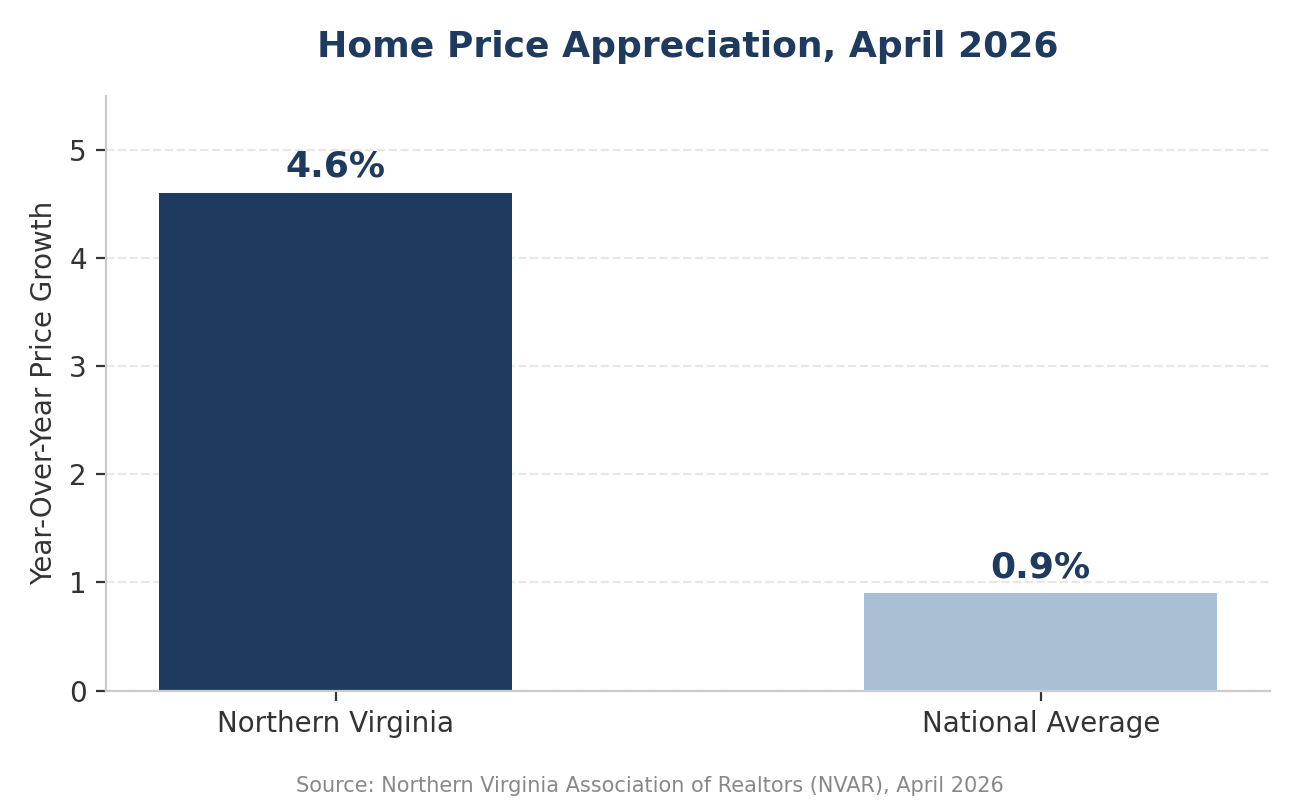
Real estate investing in Northern Virginia tends to trade cash flow for appreciation. Rents in the region were flat to slightly down over the past year, while home prices rose 4.6% year over year as of April 2026, well ahead of the national pace.That combination can still work for investors focused on long-term equity growth. Still, it means the numbers need to be run on a property-by-property basis rather than assumed from national rental investment benchmarks.
Key Takeaways
- A good cap rate for a single-family rental generally falls between 4% and 6% in major metro areas, and Northern Virginia, as a high-demand market close to Washington, D.C., tends to sit toward the lower end of that range.
- Nationally, a cash-on-cash return of 8% to 12% is considered good, and 6% to 8% is often accepted in competitive, low-risk markets, but those figures describe stabilized or legacy-financed properties. A new purchase in Northern Virginia today, at current prices and interest rates, typically produces a year-one cash-on-cash return near zero or negative.
- The median home price in Northern Virginia reached $815,000 in April 2026, up 4.6% year over year, compared to 0.9% nationally.
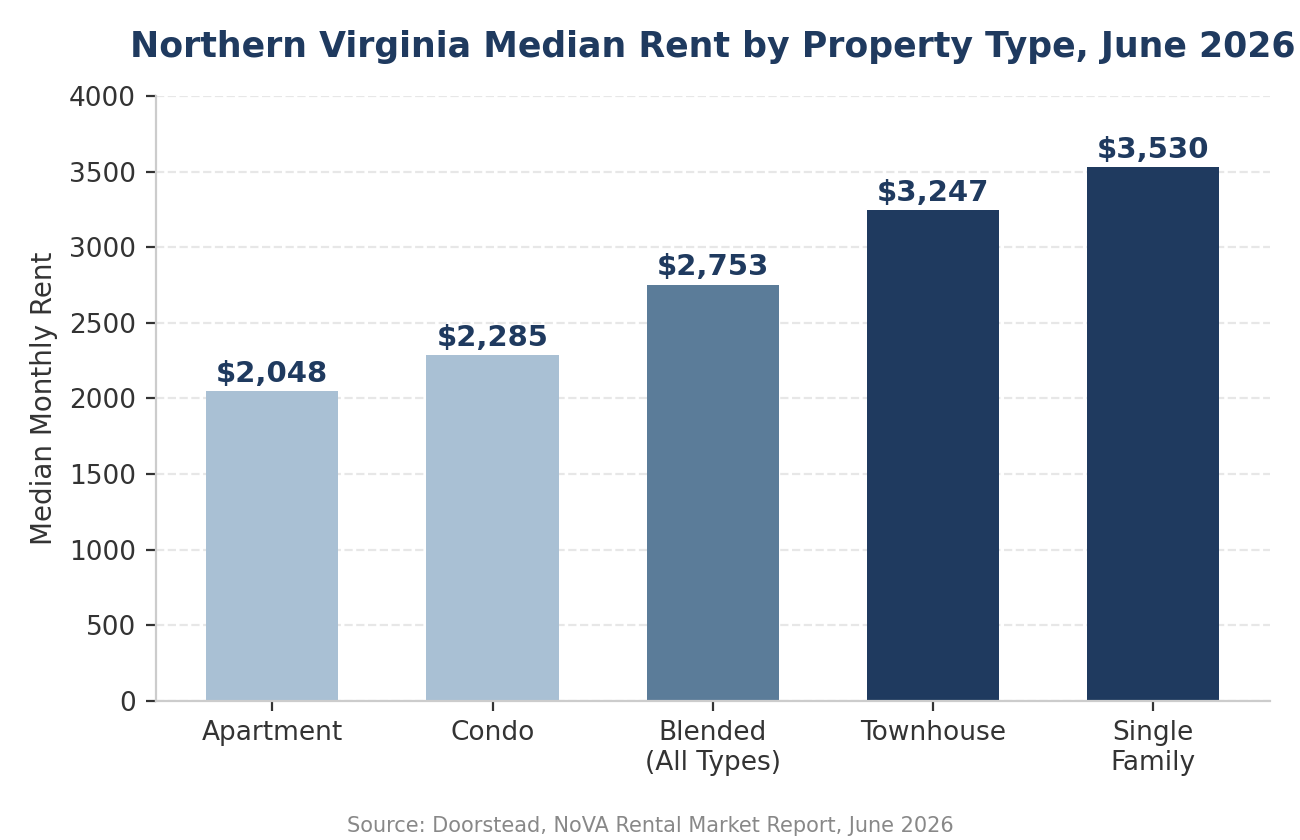
- NoVA rents were roughly flat to slightly down over the same period, with a blended median of around $2,753 and single-family rentals commanding a premium of roughly $3,530 per month.
- Single-family rentals in Northern Virginia are leasing in about 24 days on average, faster than condos or apartments. However, individual submarkets vary widely, from 23 days in Fairfax to 45 days in Arlington.
- The return on paper rarely matches the return in practice. Vacancy, tenant quality, and maintenance costs are what usually separate a property that performs from one that does not, and those are operational factors, not market factors.
Before You Buy: How to Start Investing in Rental Property
Learning how to start investing in rental property is different from buying a home you plan to live in. A buy-and-hold real estate investing strategy depends on the numbers working after the purchase, not just on whether you like the property. Most lenders require a minimum down payment of around 25% for an investment property, well above the 10% to 20% typical for a primary residence or second home, and they will look closely at your credit, existing debt, and cash reserves.Many lenders will also count a portion of the property’s expected rental income, often up to about 75% of it, toward the income you need to qualify, based on a signed lease or an appraiser’s rent estimate.
None of this replaces a conversation with a lender and a CPA before you make an offer. A lender can tell you exactly what you qualify for, and how rental income factors into that.
A CPA can also walk you through how the property should be held and what the tax treatment looks like for your specific situation. We can help you understand what a property is realistically likely to rent for and how it will perform once you own it, but decisions about financing structure and tax strategy belong with your lender and your CPA.
What “Getting Rich” From Rental Property Actually Means
Rental property returns come from three sources: cash flow (what’s left over after the mortgage, taxes, insurance, and expenses), appreciation (the property’s value increasing over time), and equity paydown (the portion of your mortgage payment that reduces principal each month).Most new investors focus on cash flow alone and miss the other two, which is part of why Northern Virginia’s numbers confuse people used to national investing content.
A property bought in Northern Virginia today will often cash flow negative in the first few years. That’s not automatically a bad investment, but it needs to be a known, budgeted part of the plan rather than a surprise, and it depends on the property being managed well enough to avoid the costs that make a negative number worse: extended vacancy, a tenant who stops paying, or deferred maintenance that turns into an expensive repair.
This is where professional investment property management earns its keep. It keeps the operational side tight enough that appreciation and equity paydown are not cancelled out by an avoidable vacancy or a poorly screened tenant.
If you already own a property and are weighing whether to keep it as a rental or sell it outright, our guide, Should I Sell My Property Or Rent It Out? walks through that decision in more depth.
Calculating Cap Rate, Cash Flow, and Your Rental Property ROI
Cap rate measures a property’s annual net operating income against its purchase price. Nationally, a good cap rate for a single-family rental typically falls between 4% and 6% in major metro areas, and 6% to 8% in secondary or developing markets.Properties in high-demand, low-inventory markets, the kind Northern Virginia has been for years, tend to sit at the lower end of that range, since buyers are paying a premium for the property itself, not just its income.
Cash-on-cash return measures your annual cash flow against the actual cash you put into the deal. Nationally, a range of 8% to 12% is commonly considered good, and conservative investors in stable, low-risk markets often accept 6% to 8%. Returns well above that range usually signal a riskier market or property, rather than a better deal.
Those figures describe stabilized properties, or ones bought years ago on legacy financing, not what a new purchase looks like in Northern Virginia today. At a 4% to 5% cap rate with 25% down at current interest rates, the math is negative leverage: the mortgage payment on the financed portion typically costs more than the property’s income covers, so year-one cash-on-cash is often near zero or negative. That’s consistent with this market’s buying-appreciation-not-yield reality, not a contradiction of it.

Analyzing Virginia Investment Property Returns and NoVA Trends
Northern Virginia’s market has a distinct shape right now. The median home sold price reached $815,000 in April 2026, up 4.6% year over year, well ahead of the 0.9% national pace, driven by limited inventory and sustained demand from federal, defense, and technology employment across the region.Rents have not kept pace. The blended median rent across all property types was roughly $2,753 in June 2026, down slightly year over year, though single-family homes still commanded a premium of around $3,530 per month. Read How Much Can I Rent My House for in Northern VA? for a closer look at what a specific property could rent for.
That gap between rising prices and softer rents is the practical version of the cap rate compression described above: Northern Virginia investors are generally buying appreciation, not yield.
“Landlords who buy in Northern Virginia today should expect the property to run cash flow negative for the first few years. That’s typical for this market, and it doesn’t mean something went wrong. The mistake is not knowing that going in, and not having the reserves to cover it.” Marc Blackwood, Real Property Management Pros
Leasing speed also varies significantly by submarket. Single-family rentals were leasing in about 24 days on average as of June 2026, with Fairfax and Leesburg absorbing inventory fastest at 23 and 25 days, respectively, while Arlington and Fredericksburg were slower at 40 to 45 days. A property priced and marketed correctly for its specific submarket will consistently outperform one priced against the regional average.
Northern Virginia’s income levels help explain why demand holds up even as rents soften slightly. Loudoun County ranks first nationally in median household income among U.S. counties, and Falls Church City and Fairfax County both rank in the top five, according to U.S. Census Bureau data. Renters here can generally absorb higher rents than in most other markets, which is part of why single-family homes in Fairfax and Loudoun continue to lease quickly even in a lighter rent environment.
Because of these hyper-local variations, working with experienced real estate investors in Northern Virginia can save you from costly miscalculations when setting up your regional portfolio.
The Real Risk Is Operational, Not the Market
The market determines what a property can theoretically return. Whether it actually delivers that return depends on decisions made after closing: who you rent to, how quickly you fill a vacancy, and how consistently maintenance gets handled.An eviction costs a landlord an average of around $3,500, and can climb toward $10,000 once legal fees, lost rent, and turnover costs are included. A single avoidable vacancy or a poorly screened tenant can erase a full year of the cash flow that a cap rate calculation promised on paper. This is why professional tenant screening and consistent maintenance matter as much to your return as the purchase price did.
“The purchase price gets all the attention, but the return is actually decided afterward, in how the property is managed month to month. We’ve seen well-bought properties underperform because of weak tenant screening, and we’ve seen ordinary properties outperform because they were run tightly.” Marc Blackwood, Real Property Management Pros
How Professional Management Protects Your Return
A property manager’s job on an investment property isn’t just a matter of filling vacancies. A property manager protects the return you underwrote when you bought the property: pricing rent correctly for the submarket, placing a tenant who’ll pay reliably, keeping up with maintenance before small problems become expensive ones, and giving you the reporting to see how the property is actually performing against your numbers. See How Much Does Property Management Cost? for a full breakdown of what that service typically costs in Northern Virginia.Our Wealth Optimizer technology takes this further by analyzing your property’s performance relative to the local market, helping you decide whether to hold, refinance, or sell based on actual data rather than a feeling that the market has moved.
Frequently Asked Questions: Real Estate Investing in Northern Virginia
These are the questions Northern Virginia investors ask most often when evaluating rental property returns.Is Northern Virginia a good market for real estate investing in Virginia?
It depends on what you’re optimizing for. Northern Virginia has historically offered strong appreciation, with home prices up 4.6% year over year as of April 2026, but comparatively modest rental yield due to high purchase prices relative to rent. Investors focused on long-term equity growth have generally done well here. A lower-cost market may better serve investors expecting strong monthly cash flow from day one.What is a good cap rate for a rental property?
A good cap rate for a single-family rental is generally 4% to 6% in major metro areas and 6% to 8% in secondary markets. High-demand markets like Northern Virginia tend to sit at the lower end of that range because property values are higher relative to the rent they generate.What is a good cash-on-cash return for a rental property?
Most investors consider 8% to 12% a good cash-on-cash return, and conservative investors in stable, low-risk markets often accept 6% to 8%. Those figures apply to stabilized properties or ones bought on older financing. A new purchase in Northern Virginia today, at current prices and interest rates, typically produces a year-one cash-on-cash return near zero or negative, which is common for this market rather than a sign of a bad deal.How do I start investing in rental property or find the best places to buy rental property in Virginia?
Start by running the numbers on a specific property rather than the market as a whole: purchase price, expected rent for that submarket, financing costs, and a realistic maintenance and vacancy reserve. A rental market analysis or a Wealth Optimizer review can show you what a specific property or portfolio is likely to return before you commit.How much down payment do you need for an investment property?
Most lenders require a minimum down payment of around 25% for an investment property, higher than the 10% to 20% typical for a primary residence or second home. Requirements vary by lender and by borrower, so confirm exact figures with a lender before budgeting for a purchase.What is the difference between a cap rate and a rental property cash flow calculator estimate?
Cap rate measures a property’s net operating income relative to its purchase price, independent of financing, making it useful for comparing properties. Cash-on-cash return measures your actual annual cash flow against the cash you invested, which accounts for your mortgage and reflects your personal return more directly.Does Northern Virginia real estate still appreciate?
Yes. The median home sold price in Northern Virginia reached $815,000 in April 2026, up 4.6% year over year, continuing to outpace the national appreciation rate of 0.9% over the same period, driven by limited housing supply and sustained regional employment demand.What is the biggest risk to a rental property’s return in Northern Virginia?
Operational risk, not market risk, is usually the bigger threat. An extended vacancy, a poorly screened tenant, or deferred maintenance can erase a year or more of projected cash flow, regardless of how strong the underlying market is.Serving Rental Property Investors Across Northern Virginia
Real Property Management Pros manages rental properties across Northern Virginia, including the City of Alexandria, Arlington County, Fairfax County, Loudoun County, Prince William County, Fauquier County, and the Greater Fredericksburg Area.If you’re evaluating a rental property purchase or want a clearer picture of how your current portfolio is performing, we are glad to walk through the numbers with you.
Related Reading
- Should I Sell My Property Or Rent It Out?
- How Much Can I Rent My House for in Northern VA?
- How Much Does Property Management Cost?
- Top 10 Reasons To Rent Your Home
- Why Tenant Screening Is So Important
- Are You Cut Out to Be a Landlord?
Article Sources
- DealForge. What Is a Good Cash-on-Cash Return? (2026 Benchmarks and Examples). February 22nd, 2026
- LendingTree. Down Payment Requirements on Rental Property. July 7th, 2026.
- RentCafe. Average Rent in Northern Virginia Cities. Accessed July 15th, 2026.
- SmartAsset. How Much Does an Eviction Cost for a Landlord? September 19th, 2024
- U.S. Census Bureau. American Community Survey: Median Household Income by County. Accessed July 15th, 2026.